Juliette Bourdier, “L’odyssée de Brandain dans l’enfer fictionnel”, French Literature Series, XLI Odysseys, Ed. Jeanne Garane, Editions Brill, (Dec. 2016): 5-20.
 The volume explores diverse aspects of French-language travel writing. Arranged chronologically by topic, the essays cover the medieval Anglo-Norman story of the Irish traveller Saint Brendan’s fantastical visit to hell; the sixteenth-century French expeditions to Florida; the seventeenth-century Dernières découvertes dans l’Amérique septentrionale de M. de la Sale mises au jour par le chevalier Tonti, 1697; the eighteenth-century Histoire générale des voyages by l’abbé Prévost; the eighteenth-century Impressions d’ Orient et d’Arabie written in French by the Polish count Waclaw Seweryn Rzewuski; nineteenth-century tales of travel in Algeria by the orientalist painter Eugène Fromentin; early twentieth-century travel narratives by the modernist Blaise Cendrars; the 1936 visit to the Soviet Union by Louis-Ferdinand Céline and André Gide, odyssean thematics in the late twentieth-century work of Nobel prize winner Patrick Modiano; the thematics of nomadism in the twentieth-century writing of Albert Memmi, and the thematics of travel in works by Bernard Ollivier, Rachid Bouchareb, Fatou Diome, Christine Montalbetti, Marie Ndiaye and Emmanuel Lepage.
L’odyssée de Brandain dans l’enfer fictionnel
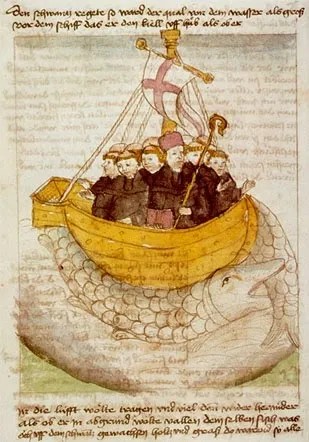
Li erre seint Brandain, rédigée au tout début du XIIe siècle par Benedeiz, auteur anglo-normand, raconte le voyage maritime parsemé d’aventures singulières, de St Brendan à la recherche du Paradis. Puisque la dernière étape de ce poème passe par les enfers, il m’a semblé intéressant de l’exposer à la tradition des voyages infernaux édifiants afin d’examiner dans quelle mesure peuvent se rencontrer le témoignage chrétien et la fiction romanesque. Cette étude se construit sur les écarts du poète par rapport à la tradition des voyages infernaux et tente de réconcilier création littéraire et mission édifiante.
Li erre seint Brandain, written at the beginning of the twelfth century by Benedeiz, author Anglo-Norman, tells the maritime journey dotted with singular adventures of St Brendan in search of Paradise. Since the last stage of this poem goes through hell, it seemed interesting to expose that part to the tradition of edifying journeys in Hell in order to examine the extent to which the testimony can meet Christian and fictional fiction.
This study is built on the discrepancies between the poem and the tradition of infernal journeys and attempts to reconcile literary creation anduplifting mission.

 Juliette Blue Bourdier, Medievalist
You must be logged in to post a comment.